
*Sources will be provided at the end.
Disclaimer : Content has not been written with help of the AI
What is a trademark?
If one is to understand the situation one is faced with, there is always a need to lay the groundwork for the parameters that define it. In cases such as this it is paramount to establish clear definition for what a trademark is and what is it there to protect so that the a cutie on the other side of the screen can make an informed decision regarding petition and further actions.
By UK and Intl law trademark* is defined as a distinctive mark or any form of sign that is capable of carrying meaning, allowing competent authorities and the public to determine and identify clear and precise source of the goods/services registered under the given mark.
Think ‘Apple’, ‘Microsoft’ or ‘Gucci’ – easily recognisable household names within their respective industries that immediately evoke specific goods and services they provide.
The rationale behind a trademark is that by its capacity to carry meaning and create associations (even arbitrary ones)it grants protection to the source of products it symbolizes – and in a readily recognisable and affirmative manner distinguishes goods/services of one undertaking from another, thus allowing consumers to associate a specific feature with a particular manufacturer.
Trademark law exists in order to protect the symbol and its source so that no person or corporation should be able to benefit from the reputation of another – and exclude others from infringing upon assets and goods protected by the specific trademark. This is only fair as the public is well aware that counterfeits/deceit do exist and are a major source of challenge when it comes to a wide variety of industries.
Thus, trademark law not only protects the sign itself but also consumers from deceptive signalling and confusion through imitation (sometimes meant to act in bad faith, other times it is more circumstantial) , so as to direct the purchasing power towards a source that does not carry the same prospects as the original. An individual or a group acquires goods and services anchored in developed identities that in one way or another align with the values of the source reflected through the trademark and its origins,
thus the law is there to protect both sides from an unfair game.
A clear example of such is In-and-Out Burgers vs Down ‘N Out Burgers (2020) where the similarities are so close to each other that the fact that they are almost identical will and does with high probability cause confusion amongst the consuming public (similar names, similar stylization and same goods/service category). However, not all trademarks are created the same nor are all disputes solely based upon clearly infringing premises.
Trademarks range from arbitrary/fanciful (‘Apple’ for computers) to generic, offering different dimensions of protection defined by the ubiquity and conditions the signal/symbol is defined by. The fuzzy space within the law is full of trademarks that fall within suggestive (higher protection) or descriptive (lower protection) context (words especially) that usually require other forms of signalising in order to acquire recognisable distinctiveness that allows a brand to act under the given insignia. This space can sometimes feel like a WildWest of trademark law where common sense and one’s own capacity to distinguish is required in order to separate and distinguish.
This is usually a result of employment of words within the context of a trademark that are fairly regularly utilised in common use language and as such acquire meaning either through other signs that allow for distinctiveness (special character stylisation through colour, font, sound or addition of other words that further narrow and specialise the mark) or by acquiring a secondary meaning through use/parody (US law) or adopted meaning in general culture.
‘Supreme’ or ‘Palace’ fall within such scope for instance.
And the last note to add is longevity of the existing trademark.
Ultimately, the significance lies whether infringing actually exists within the contextual (source/type/quality of goods),intent, public perception and whether registered trademarks hinder healthy competitiveness within the field.
This is especially important when it comes to trademarks that can be circumstantially similar and fall into the same category of goods and services, yet offer a different type of product and identity.
Which brings us to the core of the matter and space where The Great Inc. has applied for opposition for registration of ‘great’ trademark in the GB.
The dispute
On the 30th December 2025, 2 weeks before the expiration for opposition for registration (the date might be as circumstantial as it can be deliberately chosen in order to incite a certain effect) a letter arrived from a solicitor.
Now a great question that emerges is how one apprehends the presented case and circumstances and how much hold there is in the opposition itself especially if the intent is to take it further than UK IPO. It is a personal choice to create this page and petition so that the public can participate and cast an informed vote on the matter.
The cause of opposition is cited as 5(2)(b) It is similar to an earlier mark and for identical/similar goods and services.
‘The Great’ as trademarked by The Great Inc. and  as trademarked by yours truly are of capacity where there are certainly similarities, although the visual, conceptual representations, context, meaning and intended use/audience (can somewhat but in all regard) would not overlap. Nor do they by any means infringe upon each other or compete for the same resources. One can just by looking at the above start to question the level of confusion that is expected both by looking at the two signs bit also at their respective websites.
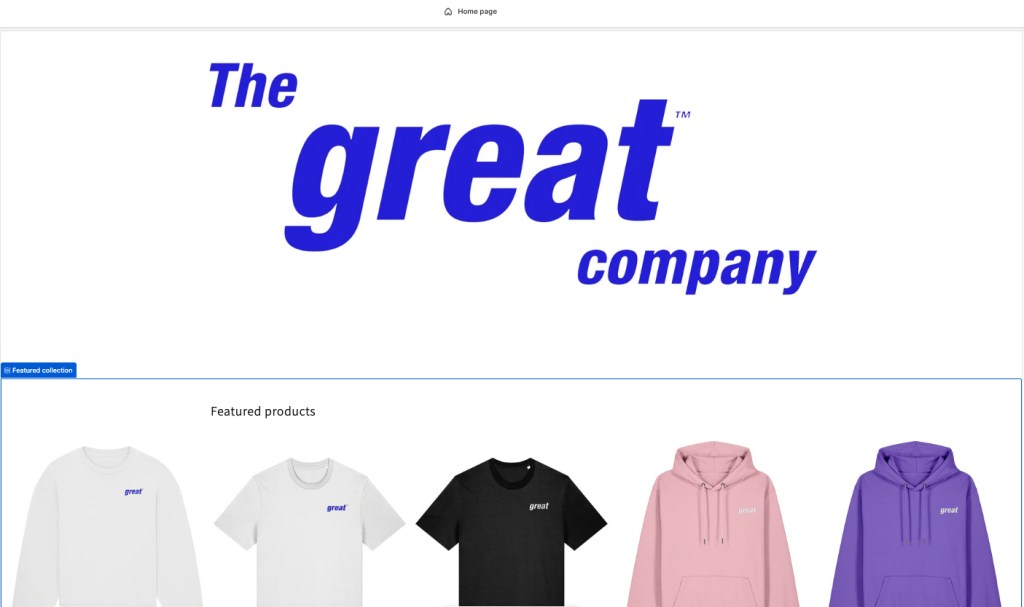
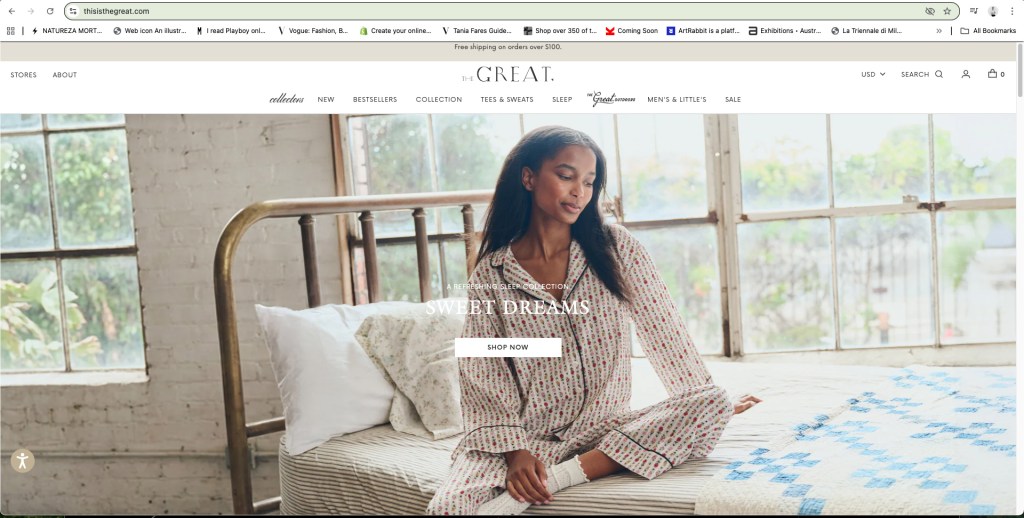
For someone who on a personal level enjoys language and its granularities ‘The Great’ and 
are very very far apart.
Just the instance of writing such showcases the initial difference – as it is readily apparent.
First and foremost ‘The Great’ is defined by two words not one – and as such the trademark acquires avery different meaning from ‘great’ even without the logo itself.
‘The’ on its own is recognised as a unique sign (that has been attempted trademarked by Ohio University to much internet hiatus) with a distinct meaning that imbues the following word with additional value very much like any other sign.
This is very important as trademarks and recognition, likelihood of confusion and identity do not exist in vacuum but are defined by the context – especially when marks themselves fall in the fuzzy category of ‘suggestive’ / ‘descriptive’.
In this case great – a word that symbolizes size in the manner of quality and quantity ( originates from Old English grēat – big, thick, massive, tracing back to Proto-Germanic *grautaz) , has acquired a specialised meaning that distinguishes it from the ‘rest’ by implying hierarchically superior standing within the sea of great(ness).
It is not specifically color coded, and consists of small and capital letters.
As such the meaning of ‘The Great’ within the language is defined by its separation from the rest and its singularity. Although somewhat distanced from ‘Supreme’ that grants supremacy to one entity (Supreme is by definition singular – implying clear hierarchy and meaning as not everyone can be supreme), ‘The Great’ still distinguishes itself by proclaiming its ‘above averageness’ in a grand way. ‘The’ stands as a distinguisher within the context of great variety and is as mentioned defined by clearly signalling singularity and separation.
Which is very very far from context, intent and visual representation and its source The Great Company operates on.
can be many things – dependent on the way it is employed within a sentence and speech as defined by its origins. It is simultaneously descriptive and suggestive, it can be affirmative or ironic.
Its usage is defined by the context and the narrative. It is ambiguous and fluent. It clearly encompasses and denotes largeness in every sense and direction. is already from its origins defined by inclusivity and ‘spread’ itself. As such it is far removed from the distinctiveness ‘The Great’ acquires linguistically through the addition of ‘The’ and the intent that comes across by looking at the website.
Which slowly brings us to the second point – the source of goods these represent.
Whilst I will not go into depths of how ‘The Great’ acts as a sign for the goods that carry its name, the source it represents has a very clear and distinctive Californian/boho spirit of its founders. It is a women oriented brand with additional gender distinct range with no deeper focus nor play on the cultural or linguistic meaning of their trademark itself.
on the other hand is first and foremost distinguishable for its striking colour/particular stylisation of a pre-existing font and as such acts as a recognisable derivative of ‘ The Great Company ’ – a space not solely meant to be defined by the products it carries, but how and why such came into being in the first place. The colour and the uniquely developed font (a derivative of Neue Plak) are a synthesis of all the references and knowledge that have gone into it. Whilst The Great Company acts as the physical embodiment of the content one can find on its YouTube account, acts as its extension, an abbreviation of TGC (trademarked x) that allows for instant association to both the goods and services TGC is wishes to provide.
As some of your truly has had an interesting life, or lives that span from being born crosseyed, to war, to war displacement and refugee camp, to MSc in Odontology from Norway, a career in fashion that has taken me to many front rows, avec alongside unexpected media coverage (whilst simultaneously working as dentist within the scope of state care for children and incapacitated groups). The personal Instagram account had well over 80k followers before a decision to leave social media (6 years now) and dedicate myself to art and academic writing.
As such TGC and the content represented on YouTube are synonymous with the narrative and knowledge developed by and enveloped within personal understandings of cultural tides that have defined humanity itself.
The content is meant to be educational, entertaining and directional. It is meant to fill the gaps within the cultural and social understandings through talking about both what entertains people in creative industries but also why it does such.
It is meant to fill generational and geographical gaps whilst providing context to narratives that we all feel developing, yet potentially never have time to organise semantically. It is also meant to provide a direction for how such translates into behavioural intricacies through subjective behaviour as presented on The Great Playground.
It plays on ambiguity, on the nuances, knowledge, irony, parody and everything else that defines the oddities of current co-ordinates succinctly encapsulated within the scope of the mark itself.
The specific colour acts as a nod to the fact that whilst there may be ‘Turtles all the way up and down’ the capacity to impact the matrix through individual agency at every level exists.
In that manner TGC and are respectfully derivatives of internet culture, of everything that defines the age of NFTs, AI, but most importantly charts the journey towards the present point whilst offering a glimpse of what the future can be.
As I wrote in the email to the solicitor, is inclusive, encompassing, reassuring, pointing out that we are all in this together.
The brand is genderless, not gender distinct.
And lastly the brand is organic. Which is a highly important point and yet another diversion from ‘The Great’ as it represents one of the most important aspects of the future evolutionary development – one anchored in the concept of health and self-care, where the recognition of the impact of (micro-)pollutants and substances have on organic life stands crucial.
Lastly it is worth mentioning that the brand has ties to the geographical origins to the country it is based in as we speak about it on our YouTube channel.
As such ‘The Great Company’ as a source of goods and services that stand under the trademark is very very far from being confused from both ‘The Great’ and its derivatives both within the contextual and the visual.
It deserves to be registered as its own trademark as it carries clear, distinct and highly recognisable indication of its origins/source and intent, rendering the likelihood of confusion quite miniscule to somewhat impossible.
That being said still exists within the context of descriptive/suggestive and whilst time is need fro it to truly come to light it is important to say that the stance will acquire a stronger foothold if we could indicate that as a trademark has acquired secondary meaning through its cultural contributions and can be adopted as a cultural symbol.
The more the merrier as the saying goes.
In that spirit the more of you enjoy, agree and are willing to share and invest (by purchasing a t-shirt, hoodie, book or other goods) in TGC and ness the stronger our case stands.
In case the above seems sensible and you wish to align with and support The Great Company and inclusive ‘great’- ness please cast your vote here.
Additional information and remarks:
- TGC and will never hinder any other trademark that intends to use the word ‘great’ within its scope, as long as it does not bear striking and irrevocable resemblance to the stylised versions as depicted above.
We wish to show that everyone can and is be great.
In case of the latter we will probably wish you good luck and ask for a tiny percentage in the spirit of referential growth. - Additionally, it is worth noticing that there are 1831 trademarks registered incorporating word great at USIpo in class 25,
And a substantial amount if class is omitted. - UK: 111 for ‘The Great’
‘Great’ – 447 in class 25,
over 1000 for great where class is omitted - ‘ The ‘- 3 in class 25,
over 1000 without
- TGC is currently looking for investors
We appreciate people who wish to invest in developing concepts of global health and self-care.
Sources:
https://www.youtube.com/@IntellectualPropertyOfficeUK
https://www.gov.uk/government/collections/intellectual-property-trade-marks
https://www.legislation.gov.uk/ukpga/1994/26/contents
https://www.youtube.com/@USPTOvideo
https://www.youtube.com/@Brand_Tuned
 The Great Company